Maria Merian 1647-1717 Dutch Botanist Maria Sibylla Merian was born in Frankfurt, Germany, into the family of Swiss engraver and publisher Matthaeus Merian. She was a naturalist and scientific illustrator who studied plants and insects and made detailed paintings about them. She described the life cycles of 186 insect species, amass-ing evidence that contradicted the contemporary notion that insects were "born of mud" by spontaneous generation. Her detailed observations and documentation of the metamor-phosis of the butterfly make her a significant contributor to entomology. Her study of tropical insects 'Metamorphosis Insectorum Suri-namensium' became a standard text.
Although her work was largely ignored by scientists at the time, in the last 30 years, her work has been rediscovered and recognised. Many schools are named after her and a modern research vessel named Maria S. Merian was launched in Germany.
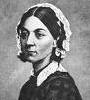
In 1854 she took a staff of nurses to the war in the Crimea, and by attacking inefficient nursing insanitary conditions reduced the death rate in hospitals from 42 per cent to 2 per cent.
In 1860 the Nightingale
School of Nursing was founded, based on her methods of training, at St. Thomas's Hospital.
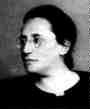
From 1908 to 1915 she worked at the Mathematical Institute of Erlangen, without pay or title. She collaborated with the algebraist Ernst Otto Fischer and started work on the more general, theoretical algebra for which she would later be recognized. In 1915 she started working with Klein and Hilbert on Einstein's general relativity theory. In 1918 she proved two theorems that were basic for both general relativity and elementary particle physics. One is still known as 'Noether's Theorem'. But she still could not join the faculty at Gottingen University because of her gender. Hilbert and Albert Einstein interceded for her, and in 1919 she obtained her permission to lecture, although still without a salary. There was debate whether mathematics should be conceptual and abstract or more physically based. Noether's conceptual approach to algebra led to a body of principles unifying algebra, geometry, linear algebra, topology, and logic.
Finally
she became recognized and received a small salary but in 1933 the Nazi government denied her because she was Jewish.
She ended up at the Institute for Advanced Study in Princeton, USA but died soon afterwards.
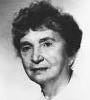
Her early work dealt with atmospheres of stars. She became an authority on 'variable stars' (stars that change in brightness) and the structure of the Milky Way Galaxy. She was one of the first women to advance to the rank of professor at Harvard University and the first woman to head a department there.
In 1934, Payne married the Russian-born Harvard astronomer Sergei Gaposchkin. They worked together on many variable star projects.
School of Nursing was founded, based on her methods of training, at St. Thomas's Hospital.
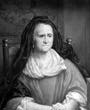
She realized that the growing textile industry was creating world markets for new dyes, so starting in 1739, she began cultivating and creating improved strains of the indigo plant from which a blue dye can be obtained. She also experimented with progressive early childhood education, an education that enabled her sons to play major roles in the American Revolution and in the government of the newly-formed United States of America.
More about Eliza Lucas Pinckney
As a nurse in New York she witnessed the close relationship between poverty, uncontrolled fertility and high rates of infant mortality. She launched a magazin 'The Woman Rebel' exhorting family planning.
Hounded with obscenity charges,
she founded the first birth control clinic in America, conducting research and dispensing
contraceptives and advise.
|