|
.
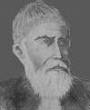
Abul-I-Fazl 1551-1602 Abul-I-Fazl 'Allami', born in Agra, India, was a historian, secretary, military commander and theologian to the Mogul emperor Akbar. Through his criticsm of the Orthodox Muslim religious leaders, he influenced the development of Akbar's new religion of tolerance.
His major
literary achievement - 'Akbarnameh' - was a history of Akbar and his ancestors concluding with
an account of Hindu culture and sciences.
He would blend Arabic, Persian, and Turkish phrases and words in a complicated fabric of inverted images, of hidden allusions which defies translations and was intended for the initiated Muslim reader.
But Fuzuli has always been known, first and foremost, as a poet of love.
His notion of love, however, has more in common with the Sufi idea of love as a projection of the essence of God.
Persian scholar, mystic and poet who lived mostly in Herat (in today's Afghanistan).
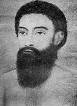
He is regarded as the last great mystical poet of Iran. His most famous mystical work, 'Lavayeh',
(Flashes of Light) contains a precise explanation of Sufi doctrines, and commentaries on the
experiences of other famous mystics. He also wrote a seven-part collection of poetry called
'Haft Owang' (The Seven Thrones).
He was a Varanasi sacred poet whose major work 'Ramcarit-manas' (Lake of the Acts of Rama) is the greatest achievement of medieval Hindi literature - a work which greatly influenced the culture of northern India.
The 'Ramcaritmanasis' expresses the religious sentiment of bakhti (loving devotion) to Rama,
who is regarded as a saviour.
|